
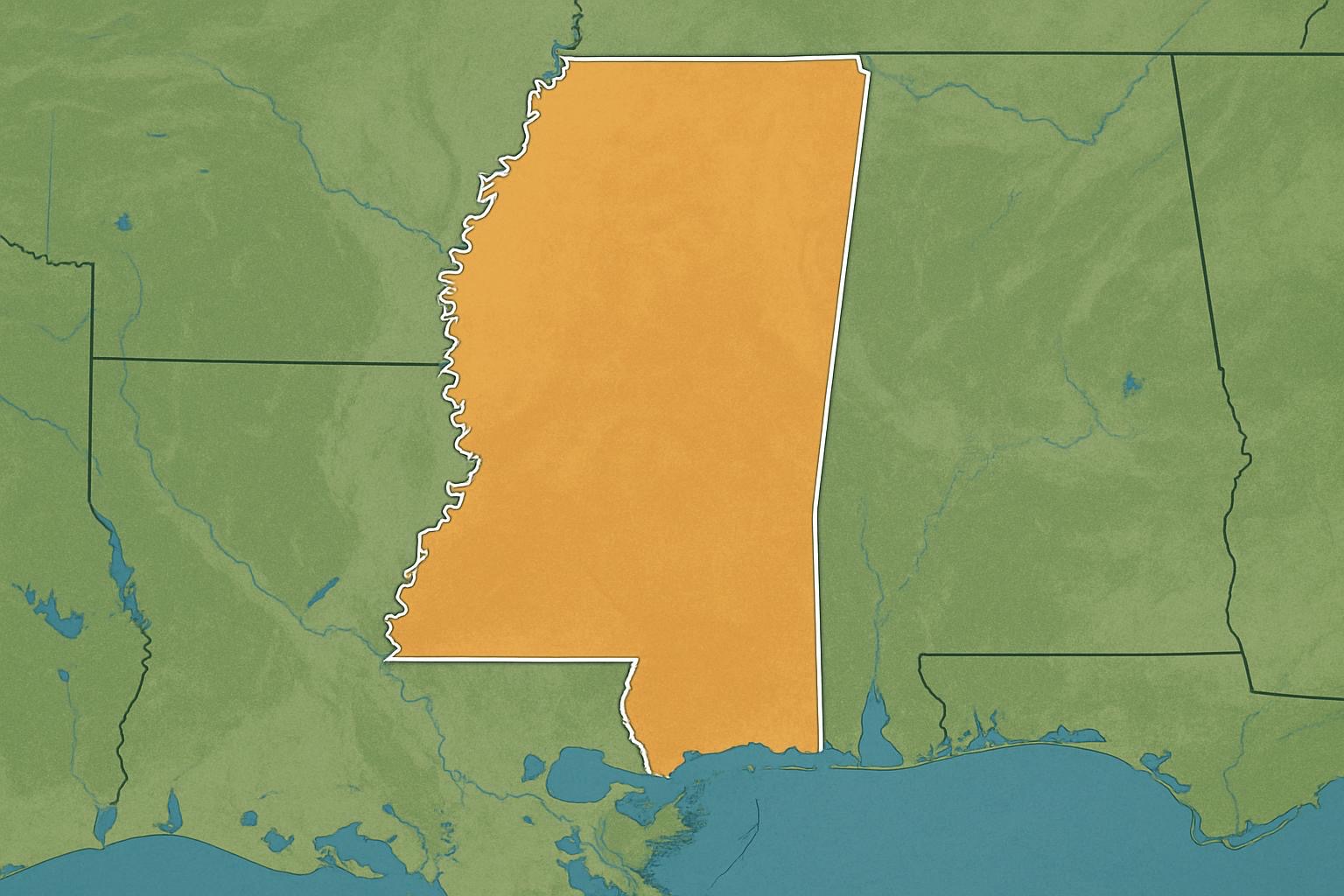
History of Education in Mississippi
Public education in Mississippi began relatively late compared with some other states. In the early 1800s most schooling came from private academies and mission schools, which served mainly children of wealthier families and were not widely accessible to all residents. The Natchez Institute (established 1845) is one example of an early public school for white students, but there was no statewide free public system before the Civil War. Vicksburg, for instance, established one of the state’s earliest publicly funded school systems around 1850, illustrating how communities began to take responsibility for local education before statewide structures existed.
After the Civil War and during Reconstruction, Mississippi’s first statewide public education system was created. The 1868 state constitution provided for free public schools for all children and established systems of local districts, a state superintendent, and county superintendents. This period also saw efforts to train teachers for newly established schools, including institutions like the Mississippi State Normal School for Colored Youth. However, the end of Reconstruction brought the rise of Jim Crow segregation; separate and deeply unequal schools for Black and white students became entrenched, with Black schools systematically underfunded and neglected throughout the late 19th and early 20th centuries.
The mid-20th century brought major legal and social battles over segregation and equal educational opportunity. Although Brown v. Board of Education (1954) declared segregated schools unconstitutional, Mississippi resisted integration longer than most states. It was not until around 1970 that the state’s public schools were largely desegregated under federal court orders, after years of token compliance and resistance. Efforts like the 1964 Freedom Schools, part of the civil rights movement’s Freedom Summer project, arose to address educational disparities for Black students by offering alternative instruction and civic education when public schools failed them.
In recent decades the state has worked to reform and improve its education system amid ongoing challenges. The Mississippi Education Reform Act of 1982 was a watershed moment, introducing compulsory attendance, state-funded kindergarten, teacher pay increases, statewide testing, and other systemic changes that helped raise graduation rates and student performance over time. Into the 21st century, Mississippi has continued grappling with issues such as funding gaps, rural shortages of teachers, recovery from events like Hurricane Katrina, and debates over curriculum and programs, even as reading and other achievement scores have shown notable improvement.
Celebrating Mississippi Education through the Mississippi March

Celebrate Mississippi’s Educational Legacy Now
Show the world hope, and excitement for Mississippi with this march!